
“We Reverse”
The case of one Project client wrongly convicted of second-degree murder, Derrick Chappell, along with his codefendants Samuel Grasty and Morton Johnson, has garnered widespread attention.
Based on new DNA evidence pointing to a completely different perpetrator, the Delaware County Court of Common Pleas granted the “Chester Three” a new trial in 2024. Now, the Pennsylvania Superior Court has reinstated their convictions.
The case of one Project client wrongly convicted of second-degree murder, Derrick Chappell, along with his codefendants Samuel Grasty and Morton Johnson, has garnered widespread attention, including as the subject of a chapter in John Grisham’s recent work of non-fiction, Framed: Astonishing True Stories of Wrongful Convictions.
Based on new DNA evidence pointing to a completely different perpetrator, the Delaware County Court of Common Pleas granted the “Chester Three” a new trial in 2024. Now, the Pennsylvania Superior Court has reinstated their convictions.
“In 2024, a Delaware County Court judge vacated the three men’s convictions, saying newly tested DNA from the crime scene cast doubt on their culpability and might have persuaded jurors to reach a different conclusion had they been presented with that evidence at trial.
“But late last month, a panel of Superior Court judges disagreed and reversed that outcome.”
President Judge Anne E. Lazarus wrote a dissenting opinion highlighting the importance of new DNA evidence in strengthening the codefendants’ defense. The Delaware County Daily Times reports more on this and the joint statement issued by our team along with attorneys for Morton and Sam.
“The fact that evidence of their innocence was available at their trial should not prevent relief when new, different, and more scientifically-advanced evidence emerges.”
Derrick, Morton, Sam, and their attorneys continue this fight, petitioning for a re-hearing. Derrick was only 15 at the time of the Delaware County crime for which he was wrongfully convicted and sentenced to life in prison without the possibility of parole. He was resentenced following earlier Supreme Court rulings that struck down mandatory minimum sentencing of juvenile offenders to life in prison without the possibility of parole. Because Derrick and his codefendants were convicted of second-degree murder, the recent Pennsylvania Supreme Court decision in the case of Commonwealth v. Lee may ultimately open a pathway for Morton and Sam to also receive sentencing relief.
For now, however, they, too, must wait.
Derrick, Sam, and Morton have been incarcerated for more than 25 years for a crime they did not commit.
“There are a lot of questions”
The “landmark decision” this March in the case of Commonwealth v. Lee struck down mandatory life in prison without the possibility of parole sentences for people convicted of second-degree murder. Following the Lee decision, the Pennsylvania Supreme Court stayed its ruling to give lawmakers 120 days to issue guidelines on sentencing and retroactivity. “That deadline passed without a resolution on July 24,” the Philadelphia Inquirer reports.
Together with several Project clients, we now face many difficulties that remain on the long path to freedom, even with new hope for eventual release. The Lee decision could affect over one thousand people incarcerated in Pennsylvania, including several Project clients wrongfully convicted of second-degree murder, and dozens more with cases already in our four-stage review process.
The “landmark decision” this March in the case of Commonwealth v. Lee struck down mandatory life in prison without the possibility of parole sentences for people convicted of second-degree murder. Second-degree or felony murder means homicide without premeditation or intent, including homicides that occur during a felony where the killing was unintentional or committed by another person involved in the crime. Following the Lee decision, the Pennsylvania Supreme Court stayed its ruling to give lawmakers 120 days to issue guidelines on sentencing and retroactivity. “That deadline passed without a resolution on July 24,” the Philadelphia Inquirer reports. “And in early August, the high court rejected a bid by several district attorneys to give lawmakers more time.”
The legislature could still take up this issue upon their return to Harrisburg this fall. In the meantime, clients now serving unconstitutional sentences may ask to be resentenced, but are unlikely to succeed until the question of the Lee decision’s retroactivity is settled.
“Legal experts expect the question of retroactivity to reach the state Supreme Court again, either through an appeal of a lower court’s denial or a so-called King’s Bench petition asking the justices to take up the issue directly.
“Lawmakers could also provide a quicker alternative by writing legislation that allows people serving second-degree murder sentences to seek parole, rather than requiring individual resentencing.”
Together with several Project clients, we now face many difficulties that remain on the long path to freedom, even with new hope for eventual release. The Lee decision could affect over one thousand people incarcerated in Pennsylvania, including several Project clients wrongfully convicted of second-degree murder, and dozens more with cases already in our four-stage review process.
The Joys of July
Many of us enter the summer season on a high note. We prepare for vacations, recognize our graduates, and plan for months of adventures and outdoor fun. Here at the Project, we would like to add to your list of things to celebrate by sharing stories about several clients released in the summertime in past years.
On July 11, 2026, Project client, Lester Eiland, and his codefendant Edward Mitchell celebrate their one-year freedom anniversary. July 11th also marks the third freedom anniversary for our Paralegal, Yahya Moore. Yahya spent more than 27 years incarcerated for a crime that he did not commit. Our team is grateful to have him with us - we benefit daily from his legal knowledge and willingness to share experience as an impacted person.
It doesn’t stop there – July has often been a time of triumph for our clients.
Join us to celebrate several freedom anniversaries this summer! Still, we know that navigating life after a wrongful conviction is no small feat. Please continue to uplift our clients and amplify their stories as we remain on our quest to unlock the truth and free the innocent.
Many of us enter the summer season on a high note. We prepare for vacations, recognize our graduates, and plan for months of adventures and outdoor fun. Here at the Project, we would like to add to your list of things to celebrate by sharing stories about several clients released in the summertime in past years. Join us to celebrate these freedom anniversaries!
On July 11, 2026, Project client, Lester Eiland, and his codefendant Edward Mitchell celebrate their one-year freedom anniversary. Last summer, the two men were released after spending 25 years incarcerated for a Harrisburg, PA crime that they did not commit. Join us in sending them well wishes as they continue to persevere through the challenges of returning home after more than two decades of wrongful incarceration.
July 11th also marks the third freedom anniversary for our Paralegal, Yahya Moore. Yahya spent more than 27 years incarcerated for a crime that he did not commit. Our team is grateful to have him with us - we benefit daily from his legal knowledge and willingness to share experience as an impacted person.
It doesn’t stop there – July has notoriously been a time of triumph for our clients.
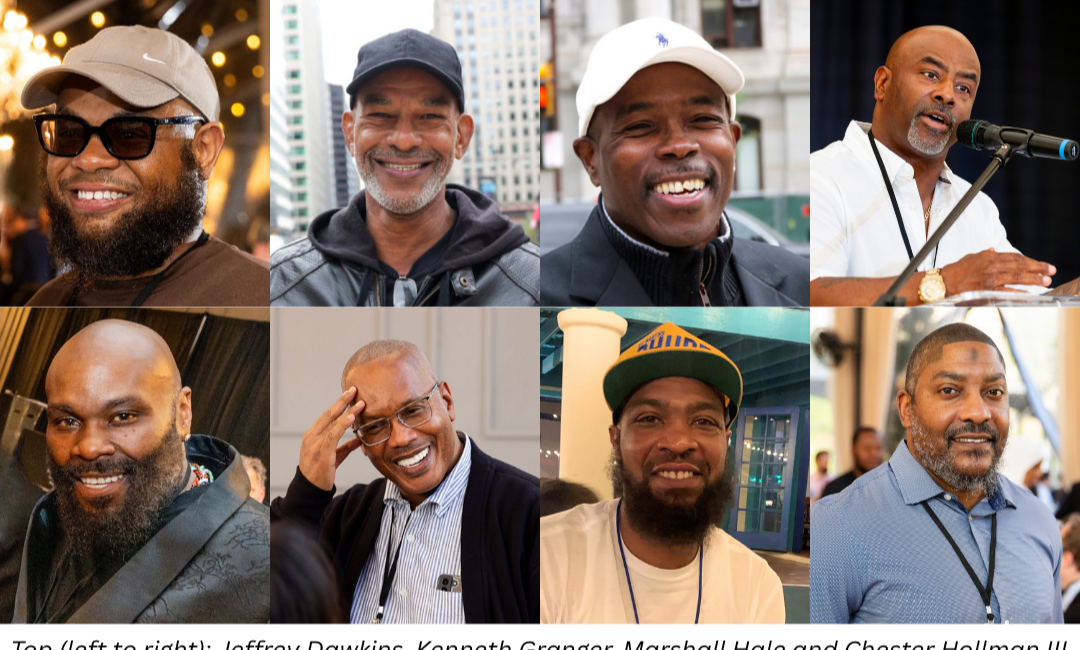
On July 14, 2010, the Project welcomed home our first client, Kenneth Granger. Kenneth made the difficult decision to accept a no-contest plea in exchange for his immediate release from prison. The prosecution offered the deal after finally disclosing evidence of Kenneth’s innocence that had been suppressed for nearly three decades. Kenneth spent 28 years incarcerated for a crime that he did not commit.
Nine years ago, we celebrated the homecomings of Lorenzo Johnson and Marshall Hale. Lorenzo and Marshall were released two days apart from each other in July 2017. Lorenzo spent a total of 22 years wrongly incarcerated. His conviction was originally vacated in 2011 but was later reinstated by the U.S. Supreme Court in 2012. Lorenzo voluntarily returned to prison until his release on July 11, 2017, after taking a no-contest plea while maintaining his innocence. Two days later, Marshall was exonerated after discovering that prosecutors hid the results of crime scene tests that proved he could not have committed the crime. Marshall spent 33 years incarcerated for a crime that he did not commit.
Seven years ago, in July 2019, we welcomed home Chester Hollman III, now a Project Board member, and John Miller. You can watch some of Chester’s story in an episode of the Netflix series, The Innocence Files, and hear a recent interview with John from the WURD Radio series Exonerated: The Cost of Wrongful Conviction.
On July 18, 2024, our legal team began their mornings in court on two opposite sides of the state. James Kelly was exonerated in Allegheny County after spending 28 years incarcerated for a crime that he did not commit. James was convicted based on the ever-changing, contradictory testimony of the key witness. Jeffrey Dawkins appeared in court the same morning in Philadelphia. With the help of his devoted family, Jeff spearheaded in depth efforts to build awareness about his wrongful conviction and seek new evidence. After 19 years of resilience, on July 19, Jeff returned home to his loved ones.
We’d also like to acknowledge the innocent men who are a part of our reentry community who celebrate freedom anniversaries in July. Congratulations to David Bryant, Gerald Howell, and David Dickson who are all celebrating another year home.
Navigating life after a wrongful conviction is no small feat. Please continue to uplift our clients and amplify their stories as we remain on our quest to unlock the truth and free the innocent.